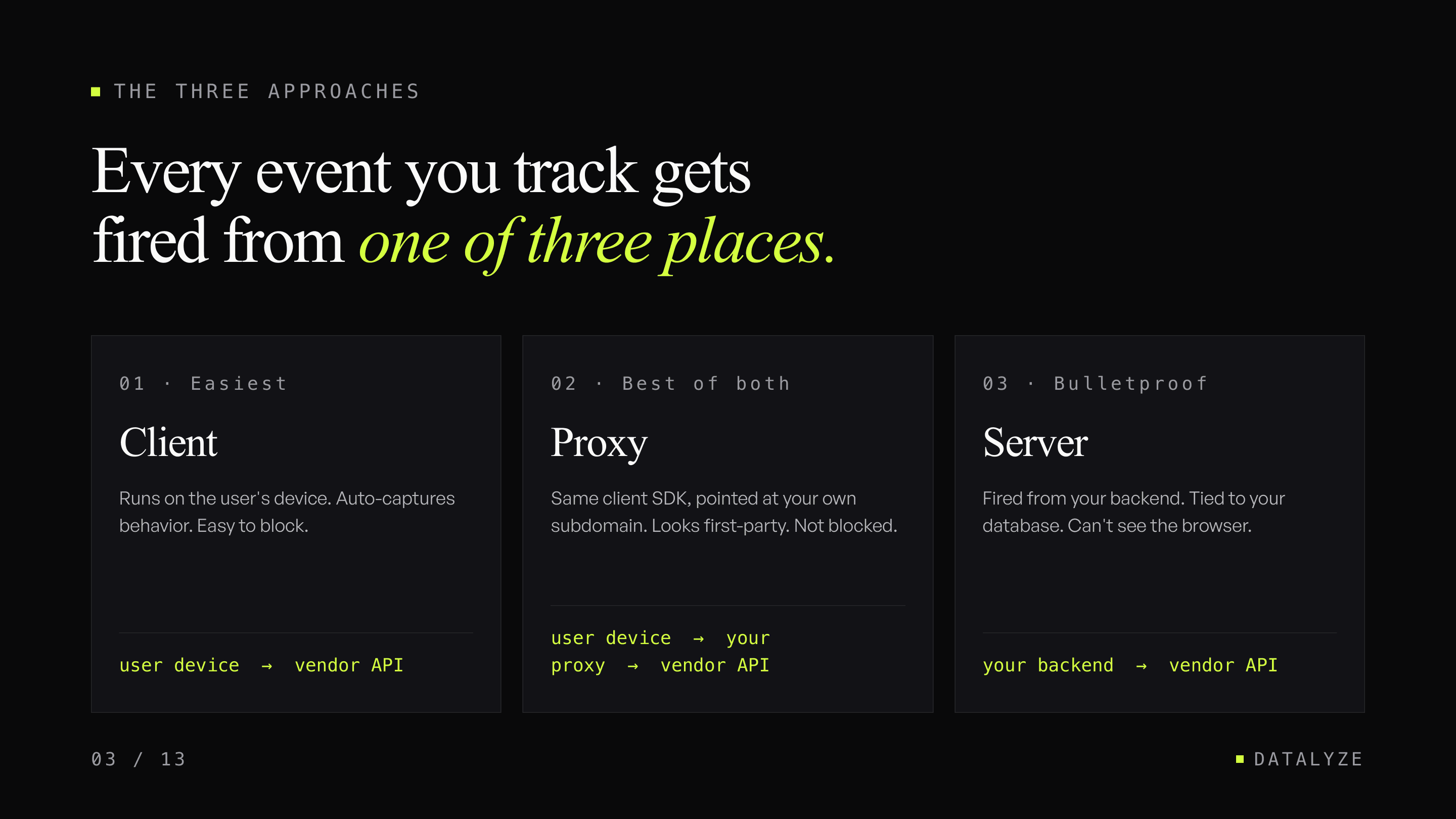
Every analytics setup has to answer one question for each event: where does it get sent from? The same “Purchase Completed” event can be fired from the user's browser, routed through a proxy on your own domain, or sent straight from your backend. The choice changes how much data you actually capture, how reliable it is, and how much it can be tampered with or blocked.
Client-side tracking
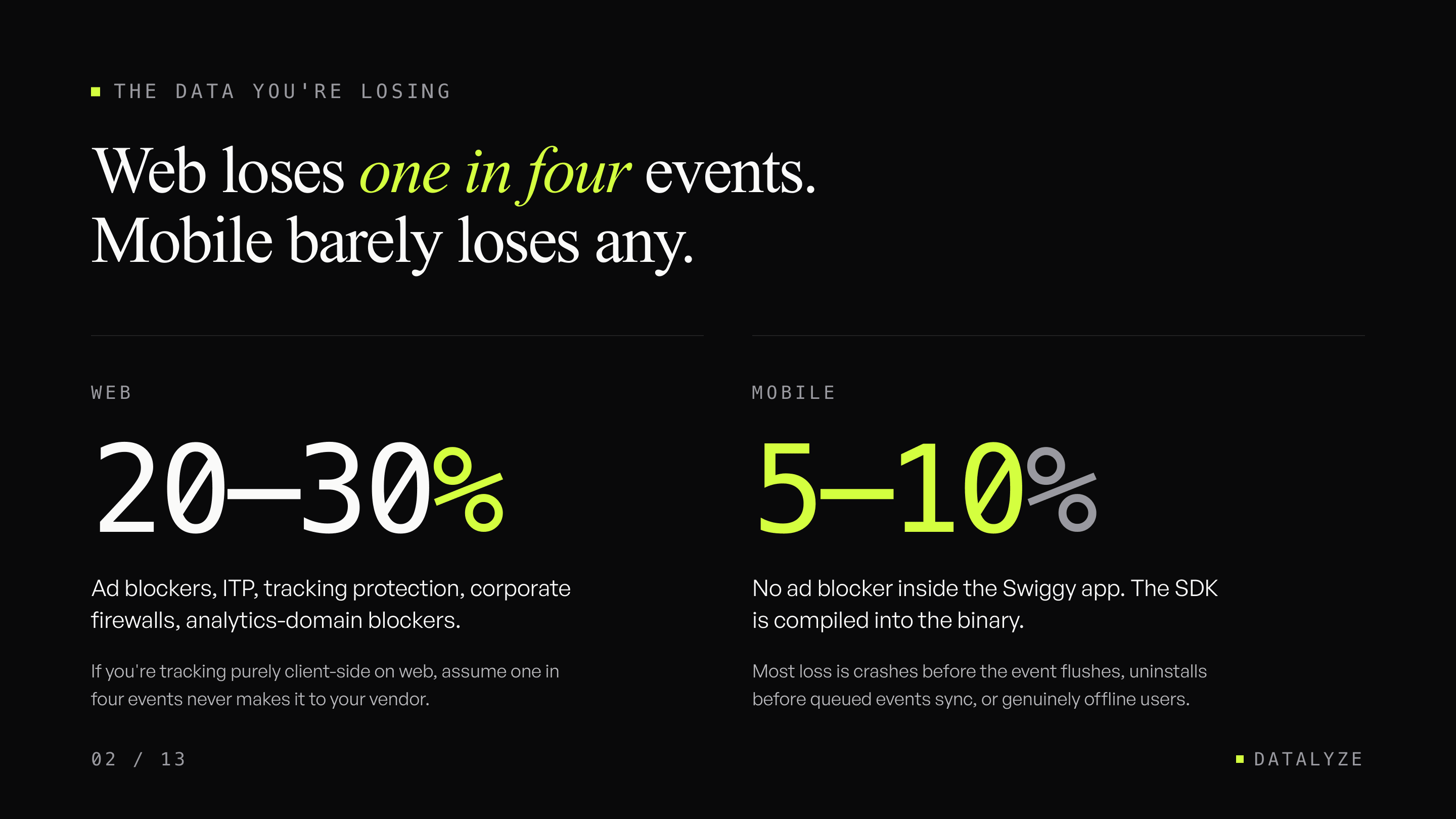
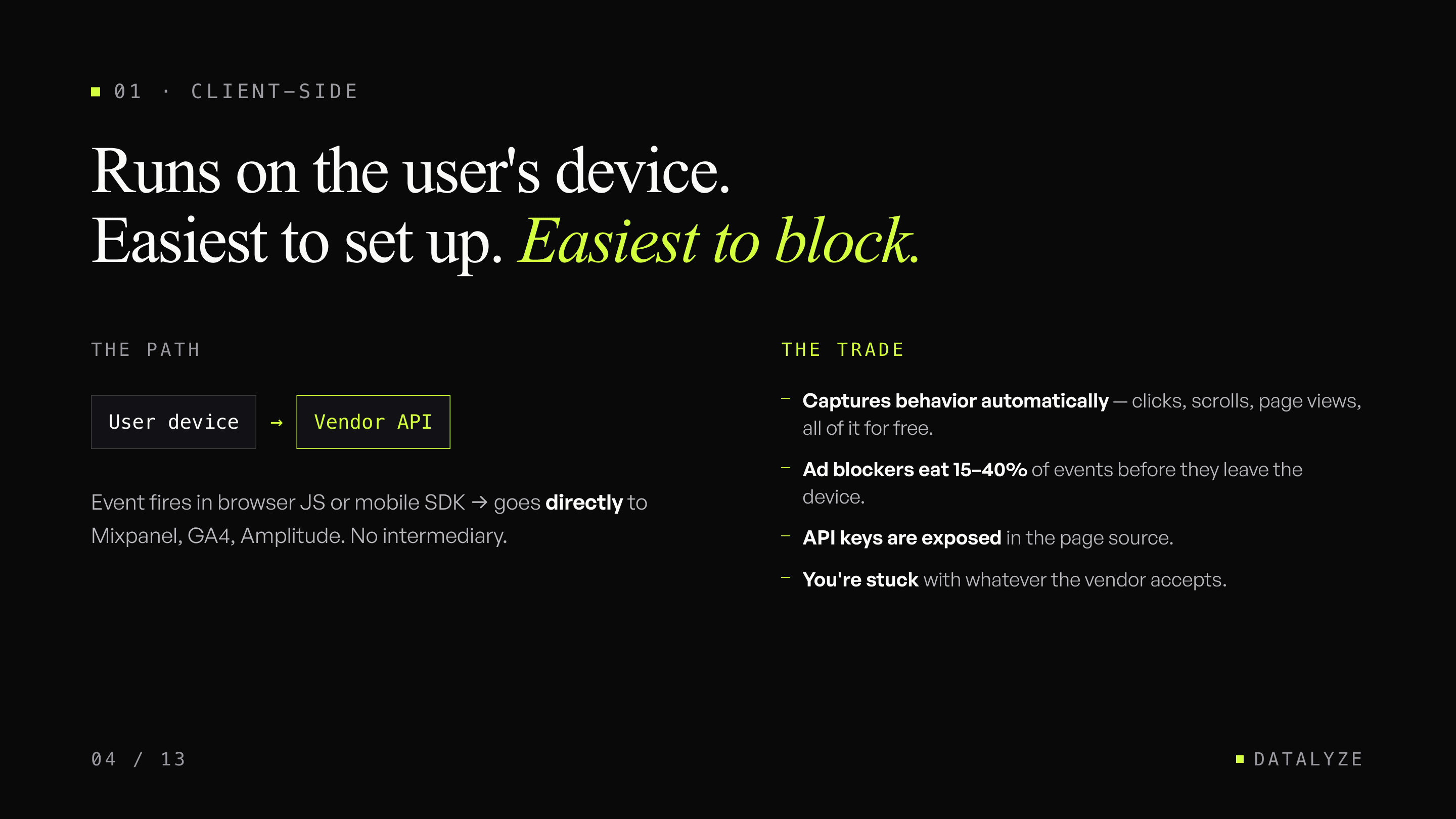
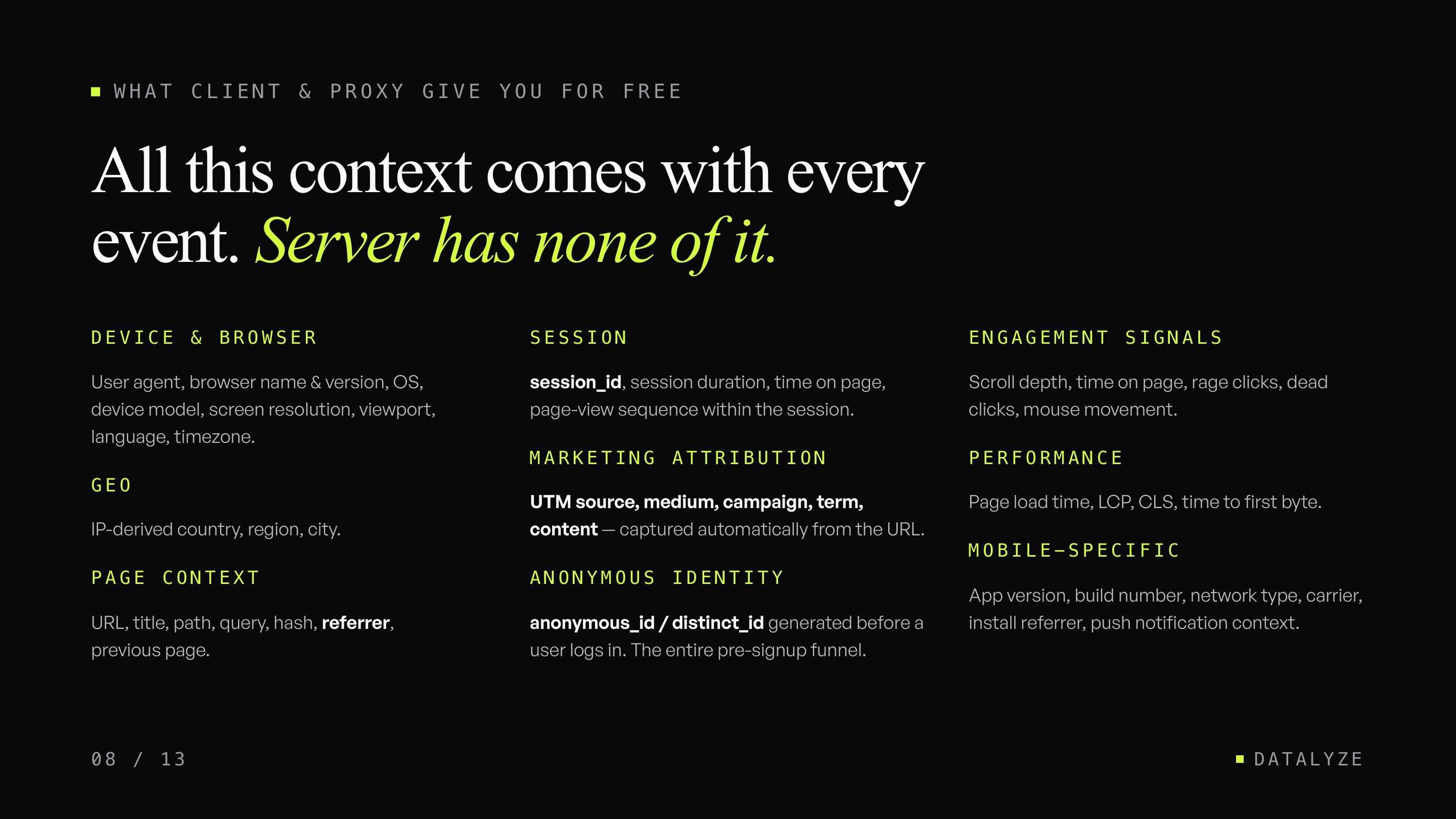
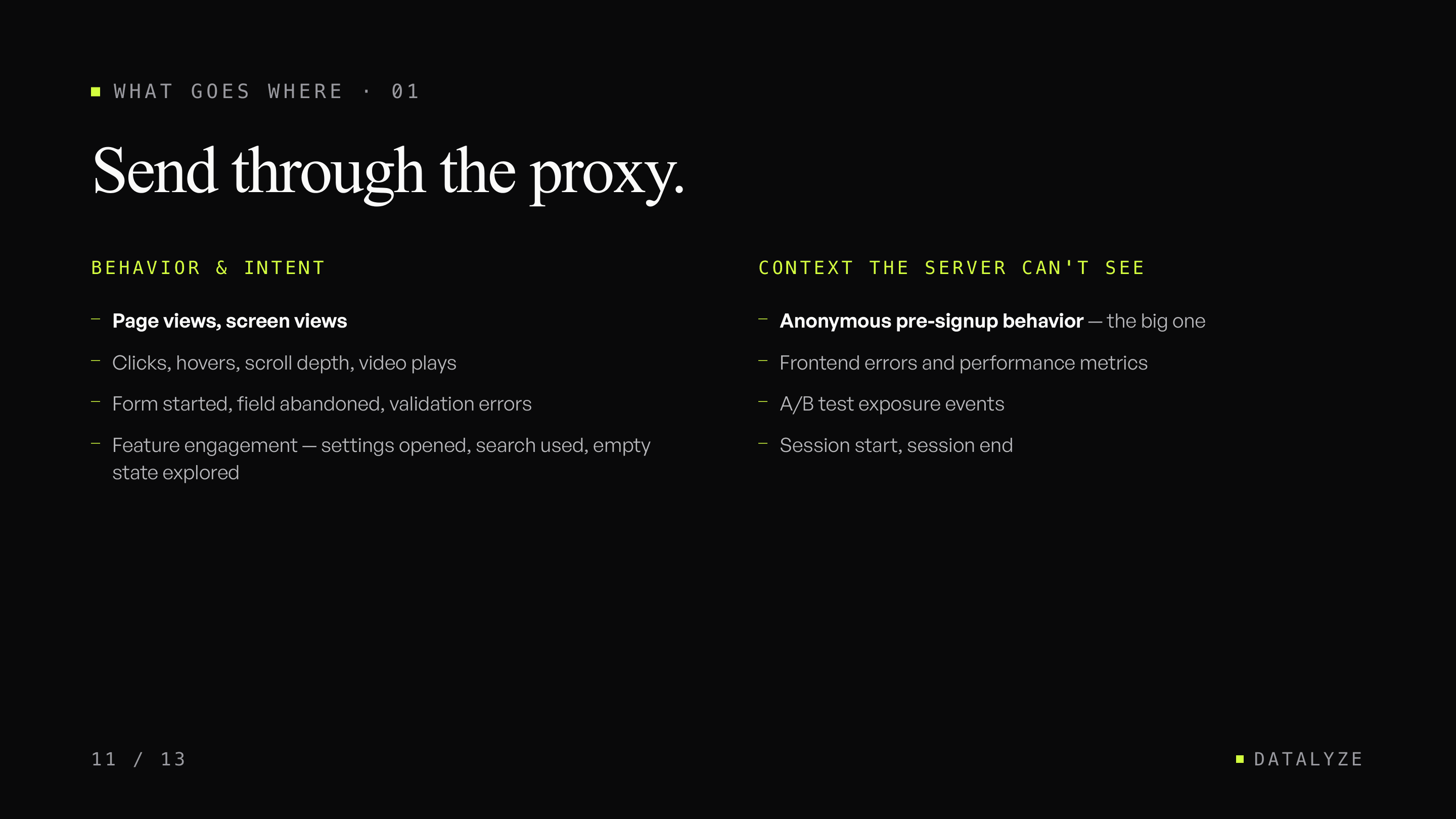
The event fires directly from the browser or mobile app, usually via an analytics SDK. It's the fastest to set up and captures rich front-end context: which button was clicked, page and referrer details, device, and the full sequence of UI interactions. The downside is reliability. Ad blockers, privacy browsers (Safari's ITP, Firefox), and network failures silently drop a meaningful share of events, and because the code runs on the user's machine it can be inspected or spoofed. Great for engagement and UX behaviour; risky for anything you need to be exact.
Server-side tracking
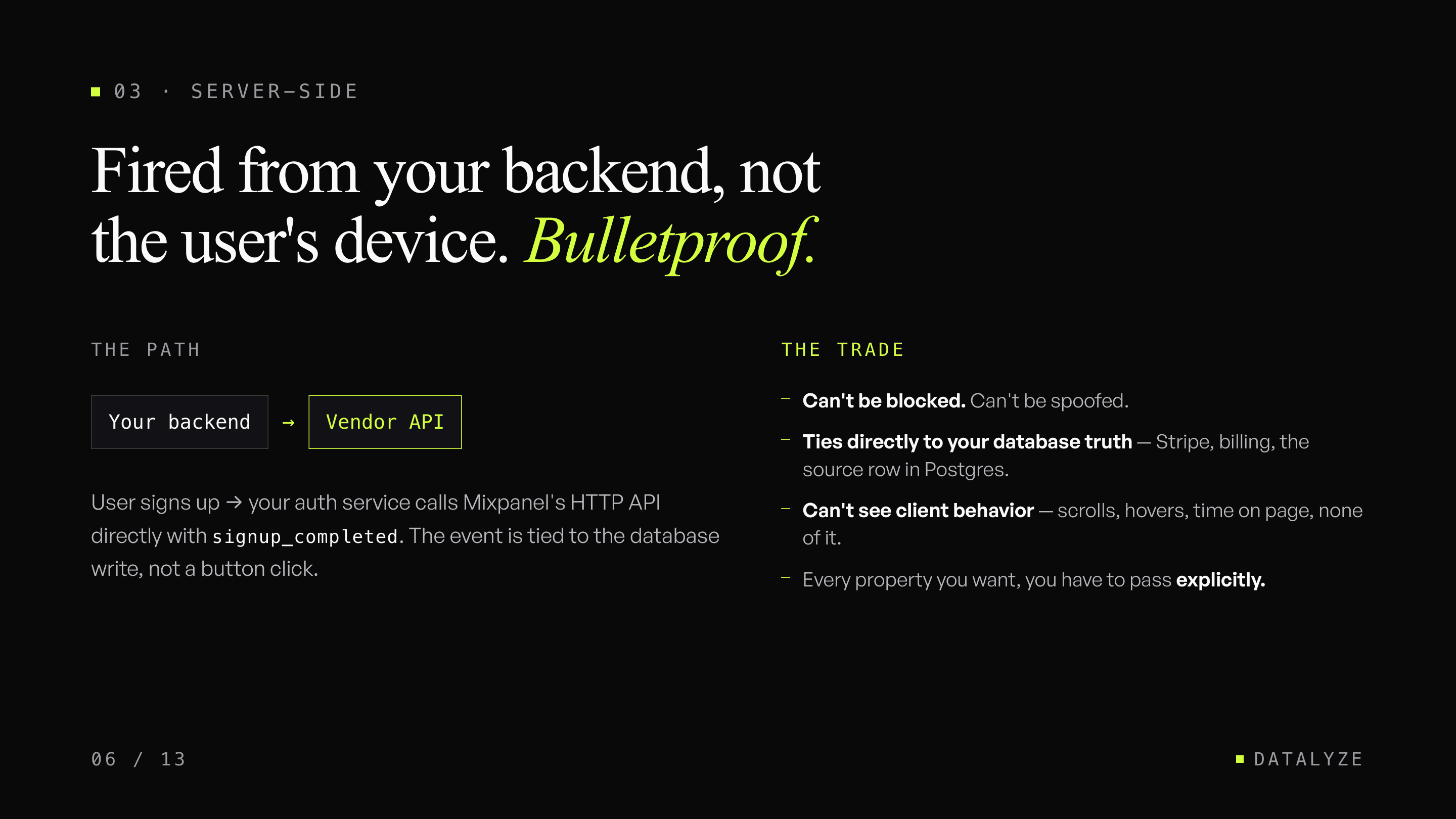
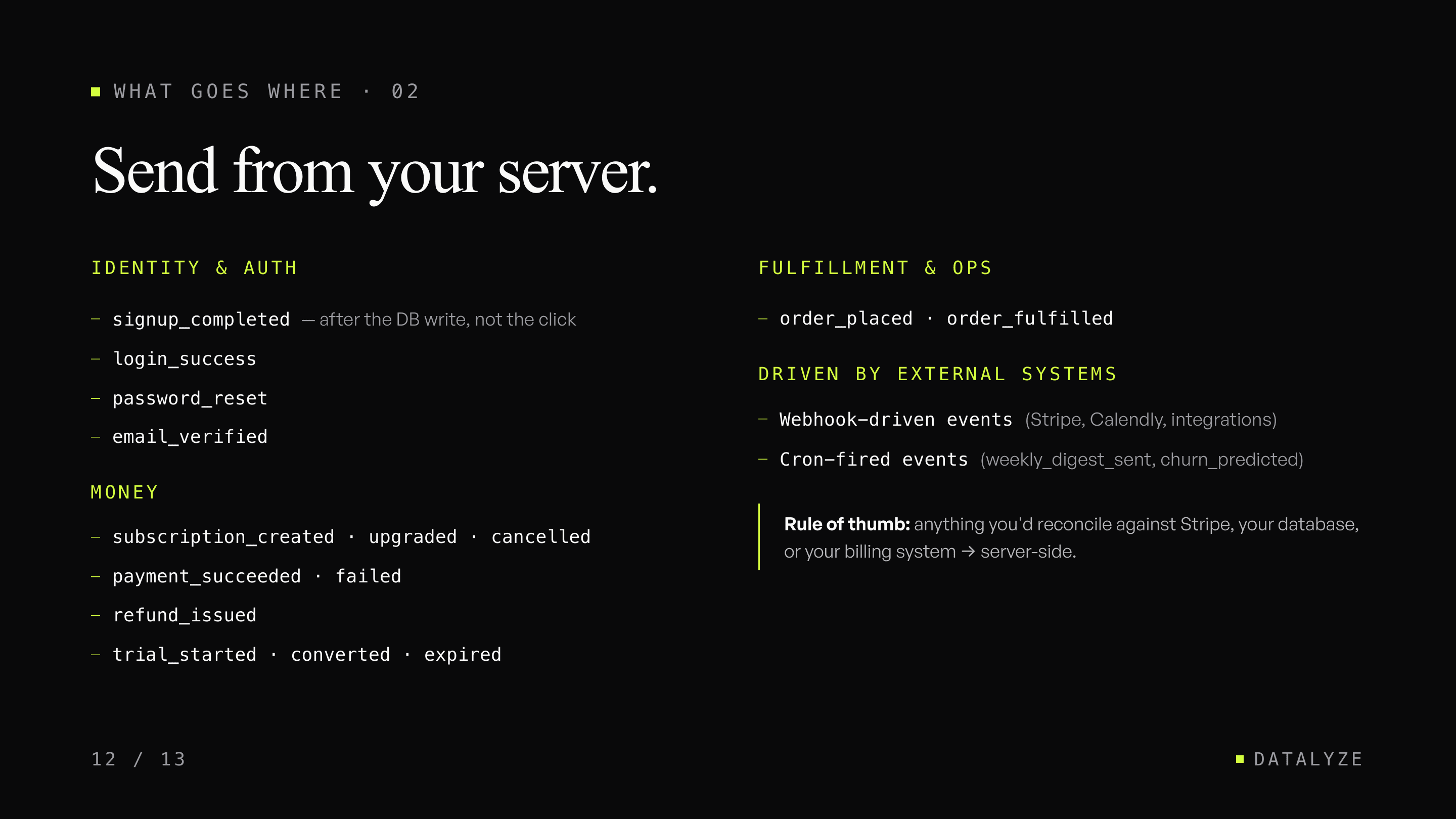
The event is sent from your own backend after an action is confirmed. Because it doesn't depend on the user's browser, it can't be blocked by extensions and is far harder to tamper with, which makes it the right home for revenue, sign-ups, and any business-critical or financial event. The trade-off is that the server often lacks front-end context (exact UI state, client-side attribution signals) and it takes more engineering effort to instrument. It's the source of truth, not the full picture.
Proxy (first-party) tracking
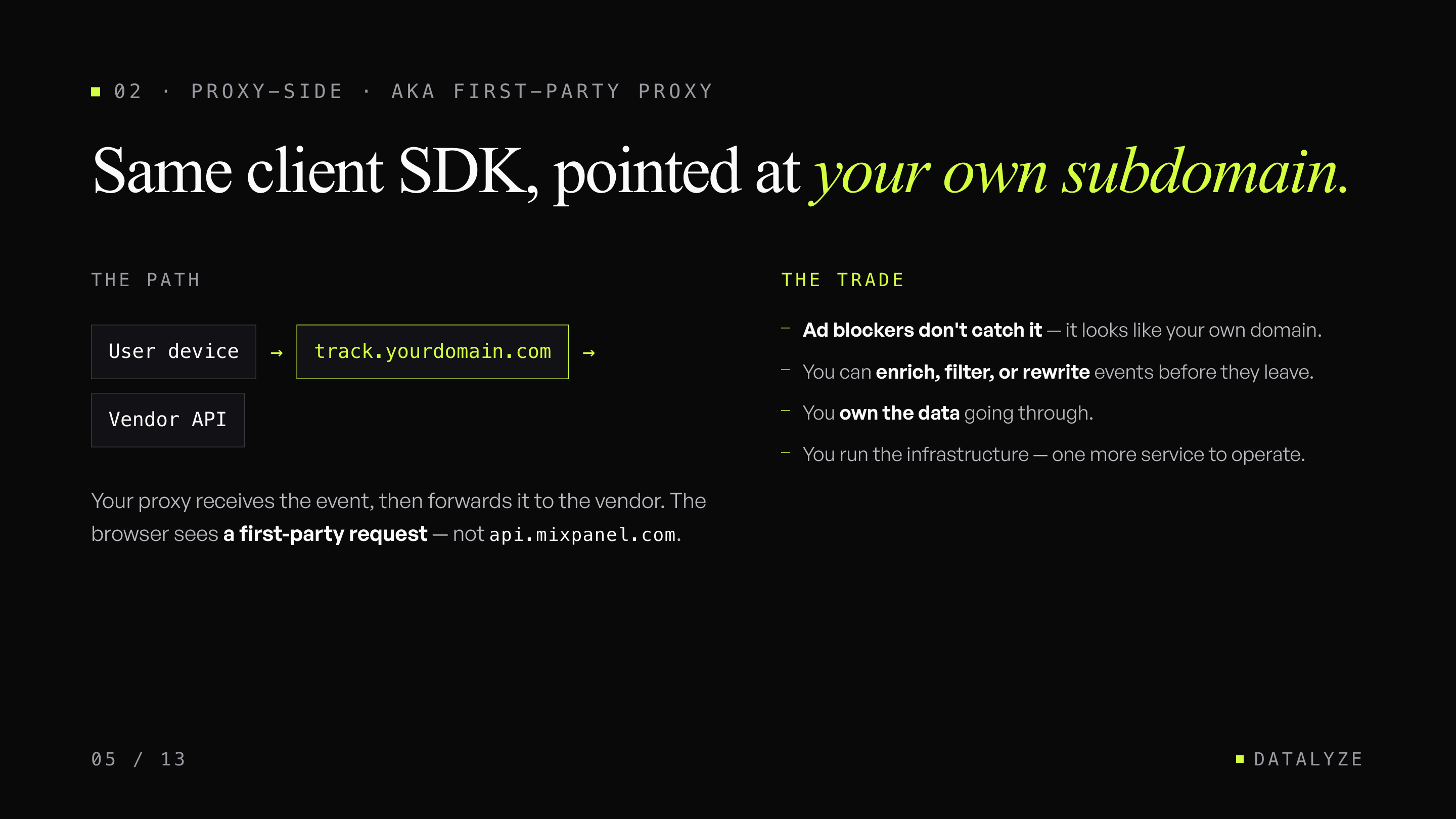
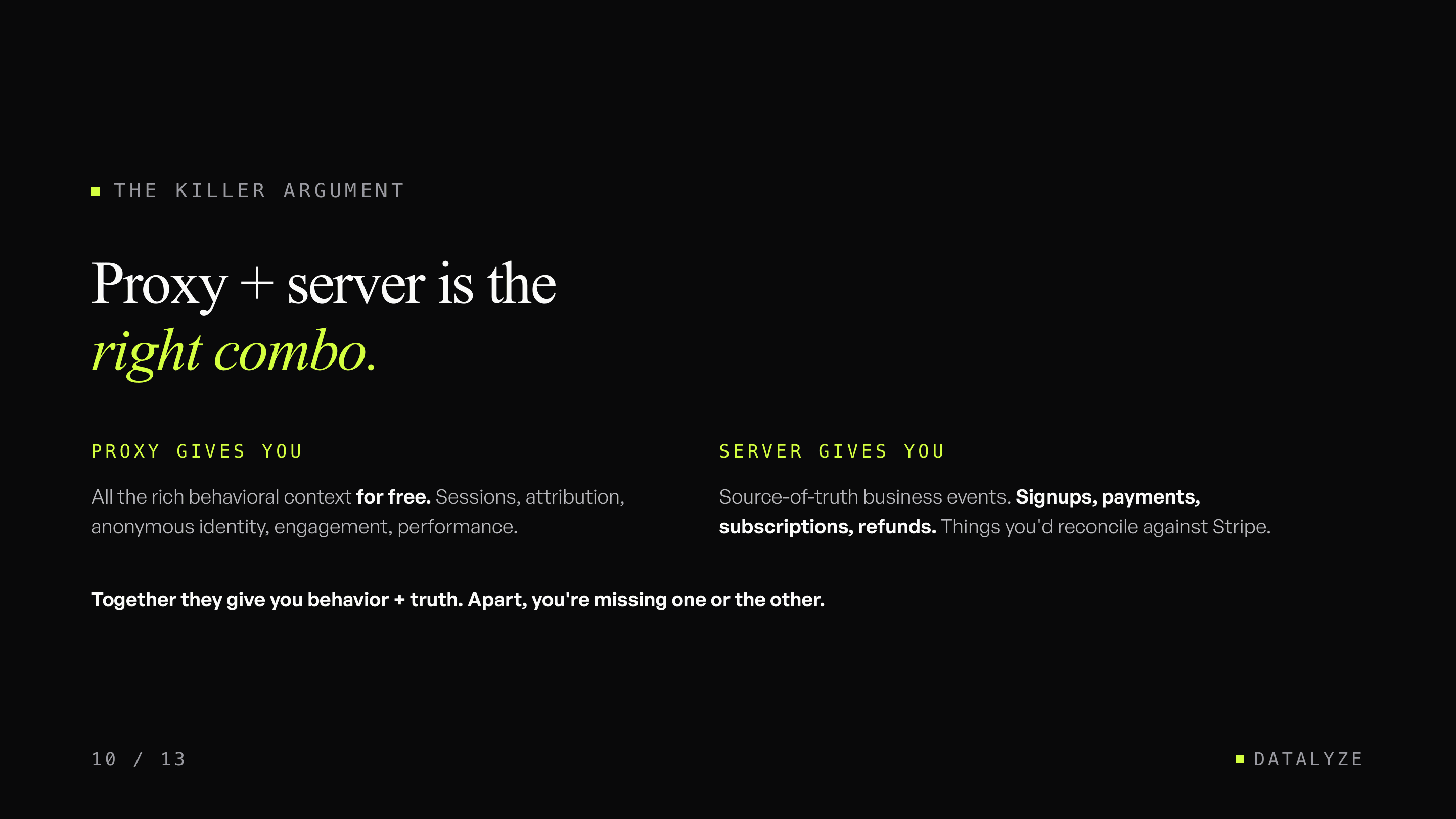
A proxy routes client-side events through an endpoint on your own domain before forwarding them to the analytics tool. You keep the richness of client-side data while recovering much of what ad blockers and tracking-prevention would otherwise drop, because the requests look first-party rather than third-party. It needs some infrastructure to run and maintain, but it's the practical way to make client-side data more complete without moving everything to the server.
How to combine them
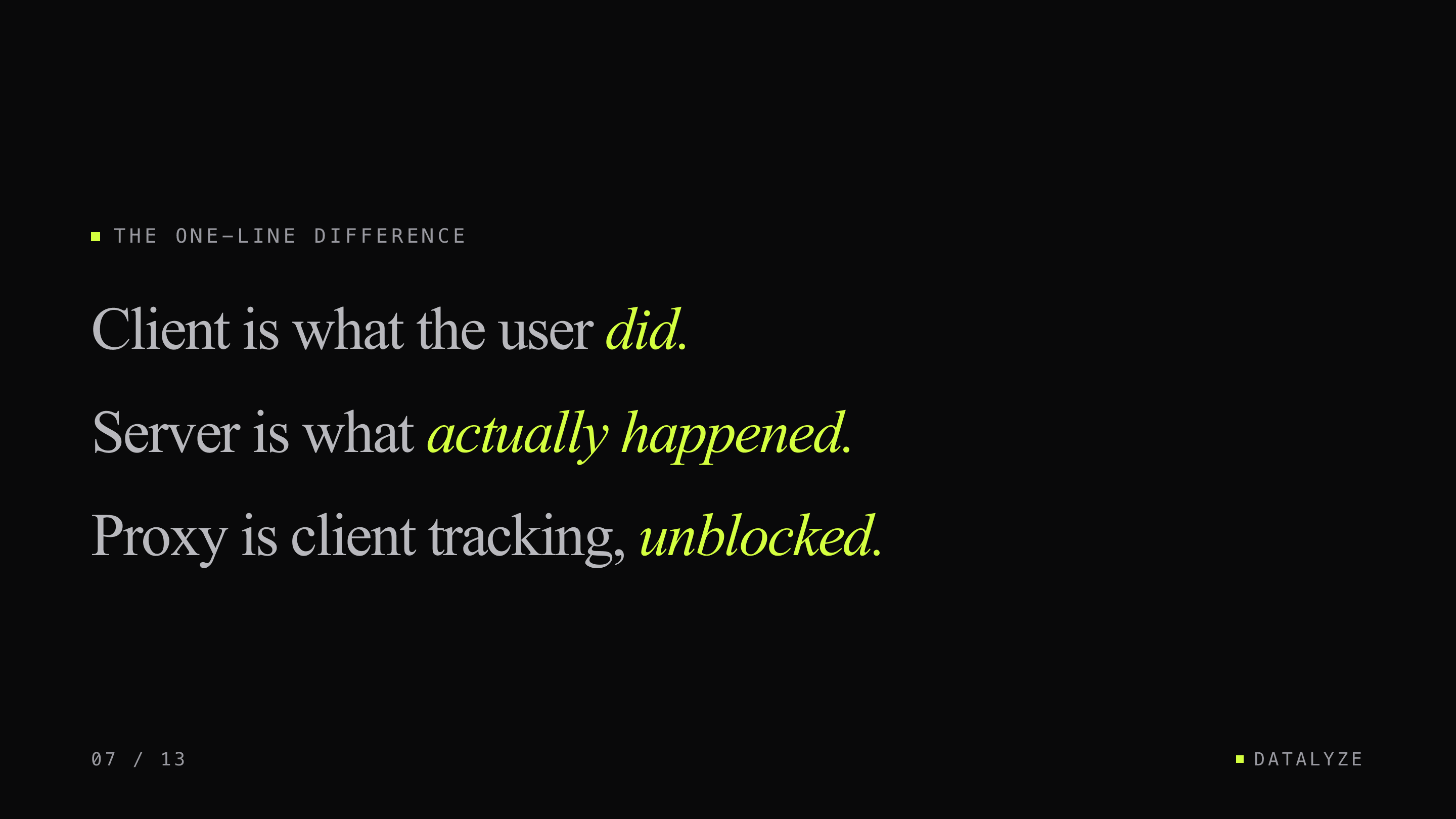
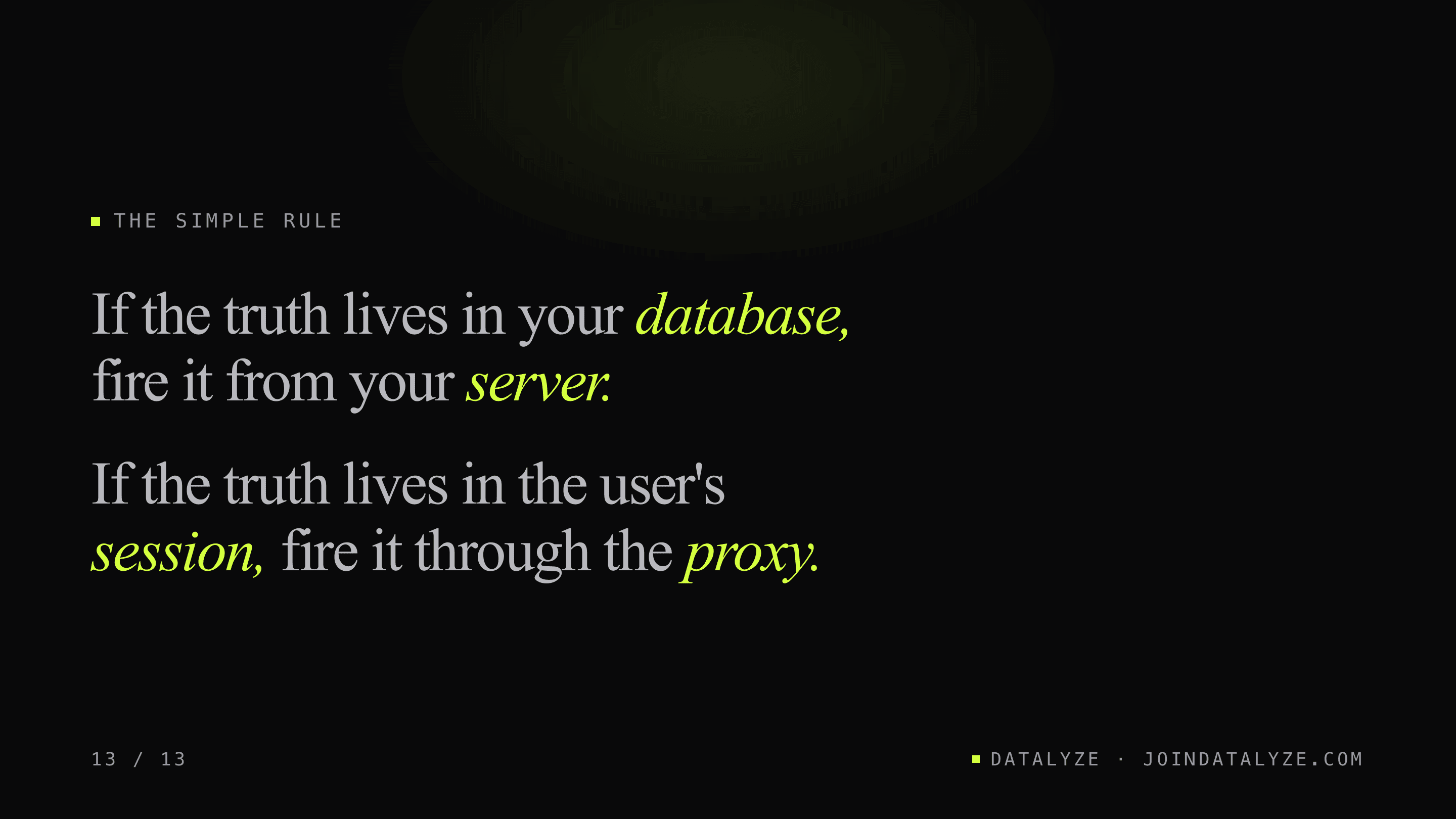
For most products the answer isn't one method, it's a deliberate split. Use server-side for revenue, sign-ups, and anything that must be exact; use client-side for UI interactions, engagement, and the behavioural detail server events can't see; and add a first-party proxy to recover the client events that blockers would otherwise lose. Decide per event based on the outcome you need from it, not by picking a single approach for everything.