The Datalyze blog
Product analytics, written down
Playbooks, case studies and a 28-week Mixpanel course for Founders, PMs and growth teams.
Latest posts
Buildern: Attribution, data models & account health scoring
Buildern had growth it couldn't explain. Datalyze rebuilt attribution and product tracking in PostHog, modelled their BigQuery data with dbt, and added a company-level health score, so the team can see which channels convert, what activation means, and which accounts are drifting toward churn.
· 5 min read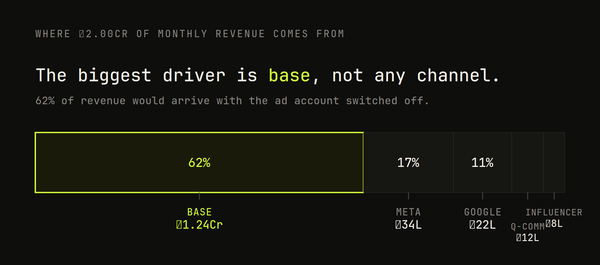
D2C Playbook 7 -- Marketing Mix Modeling (MMM)
The short version Incrementality testing told you whether one channel was real. You turned Meta off in a few cities and read the gap. But you can only test one channel at a time, and you can't turn off the ones that matter most for a growing brand: your influencer deals, your brand campaigns, the quick-commerce ad spend you can't cleanly isolate, offline. Marketing mix modeling is how you divide a whole budget across every channel at once, including the ones you can't turn off. It takes two ye
· 12 min read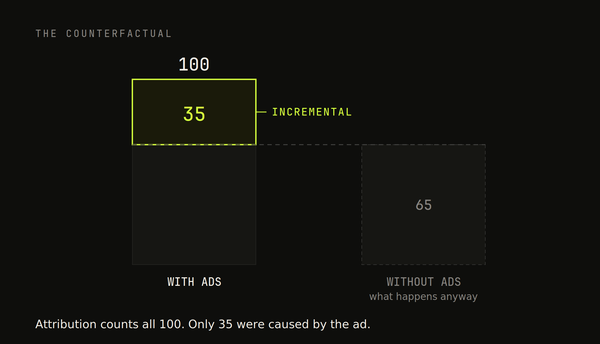
D2C Playbook 6 -- Incrementality Testing
Every ad platform you pay is graded on a test it writes, marks, and reports itself. Meta decides which sales to claim credit for, then hands you a ROAS built on that claim.
· 10 min read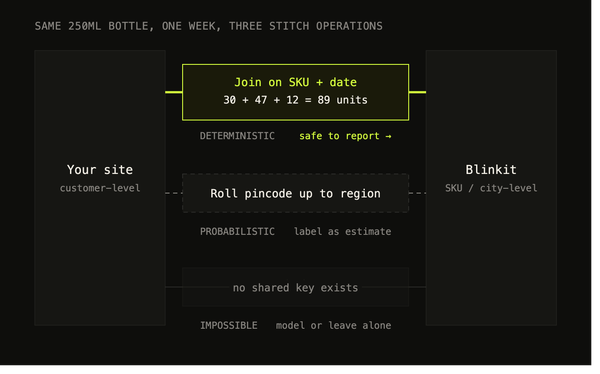
D2C Playbook 5 -- How to actually stitch website, Blinkit and Swiggy data
By now you have accepted the hard part. Your own site knows your customer. Blinkit, Swiggy and Amazon know a SKU and a sales number, never a person. Stitching sounds like one job. It is really three, and they are not equally trustworthy.
· 10 min read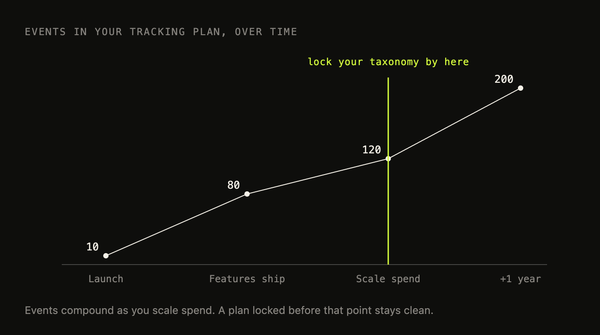
D2C Playbook 4 -- Event Taxonomy & Tool Stack Before You Scale Spend
The short version Most D2C brands don't have a tracking problem because they track too little. They have one because they track too much, badly. Related: the free event tracking plan generator. A dev fires an event every time someone asks for a number, and a year later you're sitting on 200 events, half of them the same handful of actions recorded under different names, and no clean way to answer a funnel question. The fix is boring. Decide on 20 to 30 well-named events before you scale spen
· 10 min read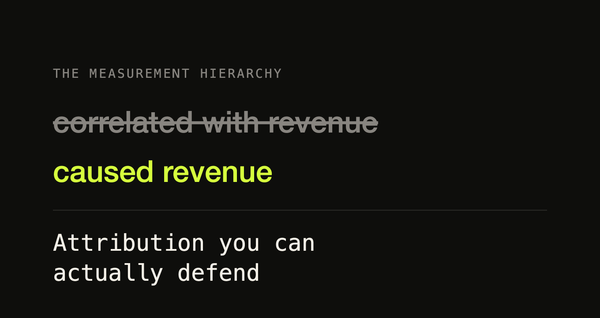
70% of Your Branded Search Conversions Would Have Happened Anyway
The short version You've scaled spend and you can finally see per-channel outcomes. Which channel drives trials, which trials convert to paid, which stick around. That's a real milestone, and most teams never get there. Related: how to run an incrementality test and marketing mix modeling, explained. Here's the problem waiting on the other side of it. Everything you built tells you where users came from. None of it tells you what actually caused the revenue. Those are different questions, and
· 9 min read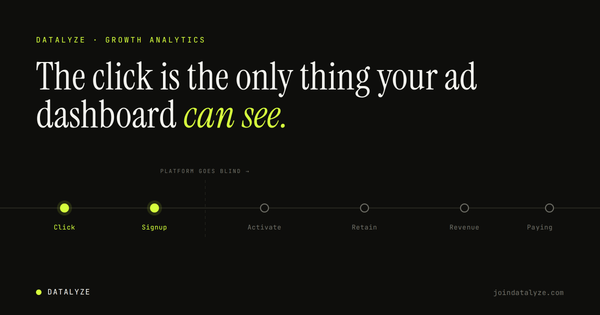
Your Cheapest Channel Is Probably Your Worst
The short version: Your ad platform only sees the click, so it grades channels on signups. Join ad data to product and revenue data and the ranking flips: the channel with the cheapest signups often produces the users who never activate and never pay. Get off GA4, get ad spend and revenue into your product tool, and judge channels on retained revenue instead of cost per signup. You're running paid across a few platforms. Google, Meta, maybe TikTok or LinkedIn. You've set up conversion actions,
· 11 min read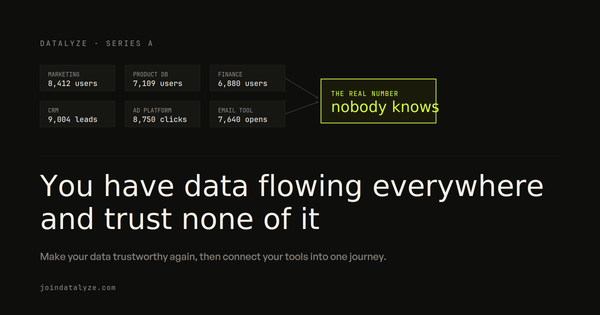
You have data flowing everywhere and trust none of it
The short version You've hit product-market fit. Thousands of users. You've got a product analytics tool already, Mixpanel or PostHog or Amplitude, plus a CRM, an email tool, and two ad platforms. All of it wired up whenever someone needed a number, none of it planned properly. So now you don't trust any of it. Marketing dashboard says one thing, the product database says another, finance says a third. And even inside your one analytics tool, the numbers feel inaccurate. First you make the da
· 10 min read
How to Set Up Product Analytics the Right Way
The short version: Pick one tool (PostHog if you want a warehouse bundled in, Mixpanel or Amplitude if you want the deepest pure product analytics). Write a tracking plan before anyone writes tracking code. Get proxy, server-side and identity stitching right at implementation. Then lay your numbers out as a funnel and start asking why. You've launched. You have users. The product is stable. And now you want to stop guessing and actually look at your data. Related: how to set up Mixpanel the ri
· 9 min read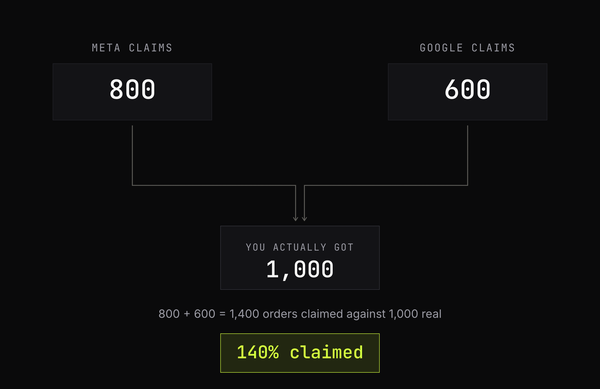
D2C Playbook 3-- Why your conversions look too good
The short version Every D2C brand is running ads on Meta and Google. If you're reading their conversion numbers and trusting them, this one's for you. Those numbers are inflated, in two separate ways, and the gap between what the platforms claim and what you actually made is the most expensive blind spot in your account. The fix isn't to make the numbers match. You can't. The fix is to take only your spend from the ad platforms, build attribution in-house, and treat your own model as the source
· 8 min read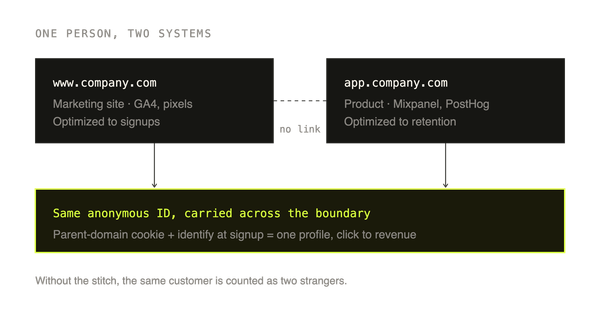
Connecting marketing and product data
The short version Your marketing site and your product live on two subdomains, and most companies never join the data between them. So you can see cost per visitor by channel, but not which channel brings users who signup, activate, retain, and pay. That second number is the one that should decide your budget, and it is sitting in two systems that are not connected. This article covers what the connected picture looks like, why you cannot trust the ROAS Google and Meta report, how to stitch id
· 7 min read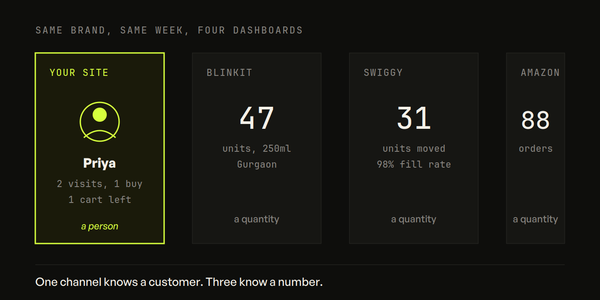
D2C Playbook 2 -- Putting all your data in one place
The short version On your own website and app, you know who your customer is. You know that Priya came back three times before she bought, that she found you through an Instagram ad, that she abandoned a cart in March and came back in May. That is the layer you set up in Part 1, and it is the layer you own. The moment you start selling on Blinkit, Swiggy, and Amazon, that knowledge disappears. Those platforms hand you sales numbers, not people. You learn that 47 units of your 250ml bottle sold
· 10 min readGet new posts by email
Simplifying analytics for Founders and PMs. One email when a post goes out.