An accurate AI layer on your data
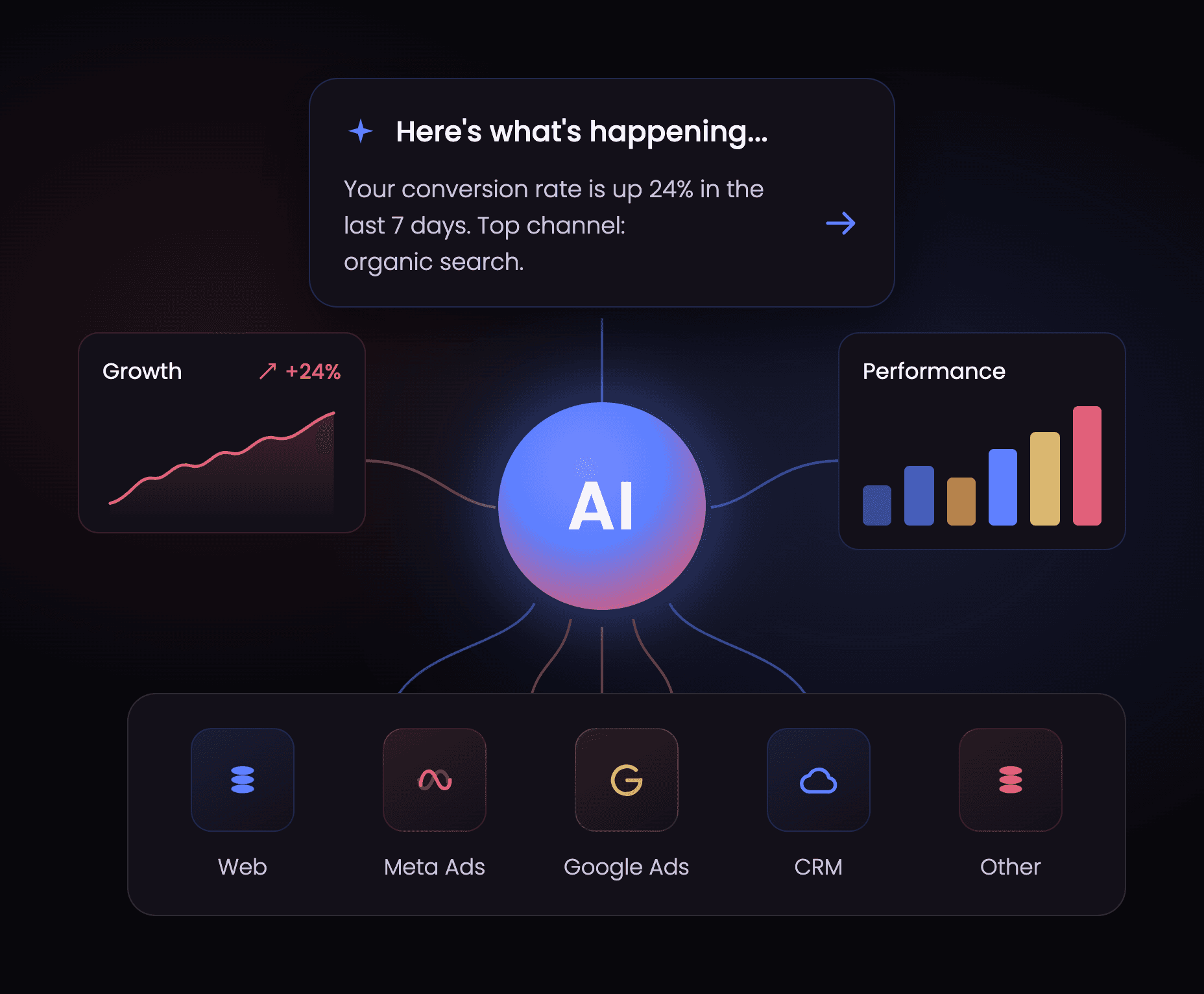
Datalyze gets your data ready for AI. We bring it into one warehouse, model it into clean tables, and add a semantic layer with the business context an AI needs. You ask questions in plain English and get answers you can trust.
























Get answers from data without waiting
What building an AI layer involves
- 01Warehouse
Get all of your data into one place
Product analytics, billing, CRM, ads and your own database, loaded into one data warehouse like BigQuery or Snowflake.
- 02Modelling
Model the data into clean marts
Raw tables turned into clean, tested marts: users, accounts, orders, sessions, revenue. Each one is built to answer real questions, with one definition for every metric.
- 03Semantic layer
Add a semantic layer with business context
What each table and column means, how tables join, how every metric is calculated, and example queries for common questions. This is what stops the AI from guessing.
- 04Connect
Connect it to your AI tool, or call it over MCP
Connect the GitHub repo to an AI analytics tool, or expose the layer over MCP so Claude, ChatGPT or your own AI tool can query it directly.
You get an AI your whole team can ask questions in plain English, and answers that you can trust.
What teams say after working with us
Where it starts: clean data
Wellness Coach tracked almost every click, with inconsistent names and properties, so dashboards disagreed and nobody trusted them. We audited every event, cut the noise, and rebuilt the taxonomy around the user journey. The team trusts the numbers again.
Read the case studySol ships every week, and ad-hoc events had piled up across every module. The audit showed where tracking had sprawled. We grouped events into core categories, moved the detail into properties, and cut the load on the frontend.
Read the case studyThese are real results from teams like yours.
Book a callAI layer questions
How long does it take to build an AI layer?
Four to six weeks. Most of that time goes into getting the data into one warehouse and modelling it; the semantic layer and the connection to your AI tool come last.
How much does an AI layer cost?
It is priced as a project, scoped by how many sources and metrics it needs to cover. Warehouse and AI tool costs are billed to you directly by those vendors.
What do you need from us?
Access to the data sources and your warehouse, and the list of questions your team asks most. Those questions decide which metrics the semantic layer defines first.
Which AI tools does it work with?
Any tool that can read a GitHub repository or call an MCP server. That includes Claude, ChatGPT and AI analytics tools, or an agent you build yourself.
Why not just connect ChatGPT to our raw data?
Because raw tables do not say what a metric means. Without a semantic layer the AI guesses which table holds revenue or what counts as an active user, and two people asking the same question get two answers.