Media mix modelling: measuring untrackable channels
Media mix modelling measures the channels you cannot track with a link, such as influencers, offline campaigns and brand spend. You give it one row per week with spend per channel, total signups and what else was going on. It works backwards to split your signups into base and the part each channel caused.
You paid an influencer for a campaign. The money went out, your signups moved that month, and nothing in your analytics tool tells you how much of that movement was them. Same with an offline campaign.
Other channels are easy. Ads with tracked links, campaigns running on their own URLs, referrals. You know exactly how much traffic each one sent you.
Media mix modellingEstimating what each marketing channel contributed from weekly spend and outcome data rather than from tracked clicks. It is how influencer, offline and brand spend get measured at all.Glossary is for the rest.
Let's get into it.
What data does media mix modelling need?
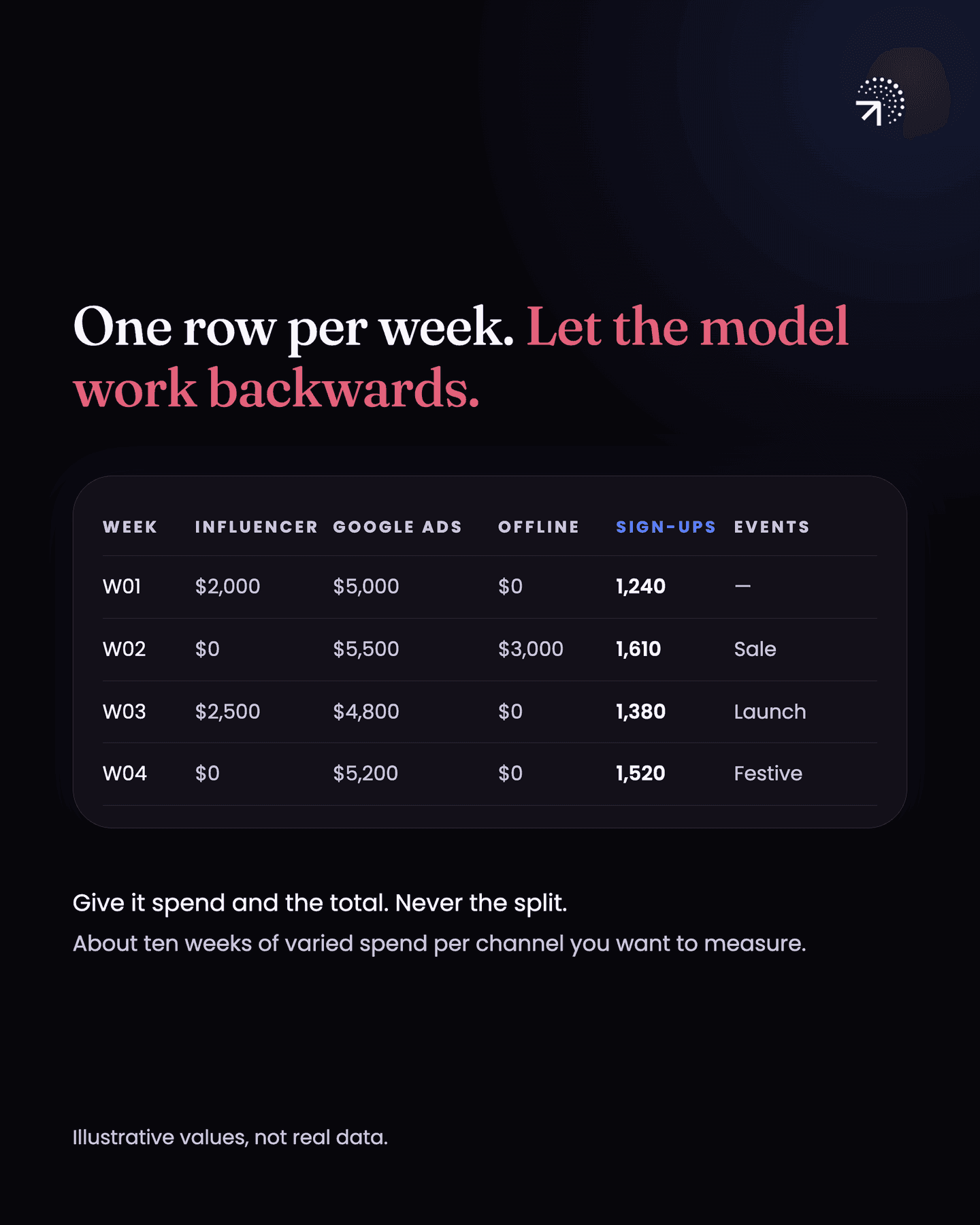
A spreadsheet. One row per week. You can use months if that fits how you spend, but weekly is usually better because it gives you more rows.
Each row says:
- This week, this is how much we spent on the influencer campaign.
- This is how much we spent on Google Ads.
- This is how much we spent on the offline campaign.
- This is my total number of signups that week.
- And this is what else was going on: a festive week, a sale, a launch.
Notice what you are not giving it. You are not giving it the split. You never tell it "Google got me 400 signups that week". You give it the spend, you give it the total, and you let it work backwards.
How much history does media mix modelling need?
Roughly ten weeks of data for every channel you want to measure. Four channels means about forty weeks. Eight channels means well over a year.
| Channels you want to measure | History you need |
|---|---|
| 1 | About ten weeks |
| 4 | About forty weeks |
| 8 | Well over a year |
Meta's open-source Robyn project gives the same ratio in its analyst's guide to MMM: ten observations for every independent variable, with weekly data as the best practice.
And it has to be varied history, not just long history. If you spent the same amount on Google every single week, the model has nothing to work with, because nothing ever moved. Spend that changes week on week is what makes this work.
What does a media mix model tell you?
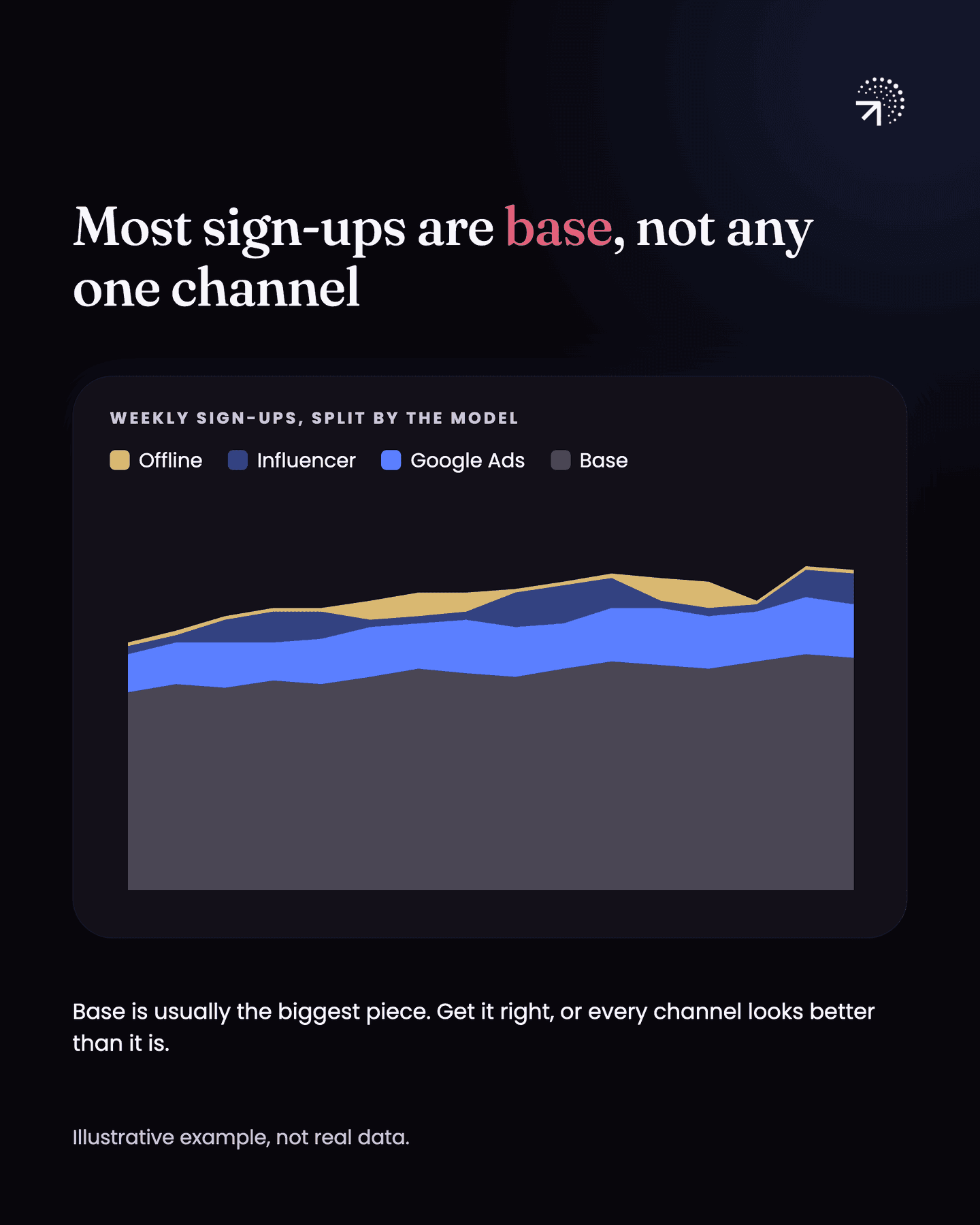
A media mix model splits your signups into base and the part each channel caused. To get there, a regression model reads your spreadsheet. A regression is a statistical method that looks at how your signups rose and fell as each channel's spend rose and fell, and works out how much each one moved the total. It splits your signups into named pieces.
The first piece is base: the signups you would have got with every ad switched off. Organic search, word of mouth, people who already knew your name.
Base is usually the single largest piece, bigger than any individual channel.
Getting base right is most of the value here. Every signup that belongs to base but gets credited to Google makes Google look better than it is. That pulls your budget toward spend that was never doing the work. The channel splits are almost a byproduct.
What is left after base is the part your spending actually caused, divided across your channels.
Once you have that, you can use it:
- Launch something new and you can see what it moved.
- Ask what worked this week and what did not, and the model has the history to answer.
- Ask what it would cost you to turn a channel off. No dashboard answers that.
Common questions
What is media mix modelling?
A way of estimating what each marketing channel contributed using weekly spend and outcome data rather than tracked clicks. It's how you measure influencer, offline and brand spend that no link can attribute.
How much history do you need for media mix modelling?
Enough rows for the model to separate the channels, which is why weekly data usually beats monthly: the same period gives you four times as many rows to learn from.
What is base in media mix modelling?
Base is the signups you would have got with every ad switched off: organic search, word of mouth, people who already knew your name. It is usually the single largest piece, and getting it right is most of the value of the model.
Why does media mix modelling need spend that varies?
The model learns from how signups rose and fell as each channel's spend rose and fell. If you spent the same amount on a channel every week, nothing moved, and the model has nothing to work with.